
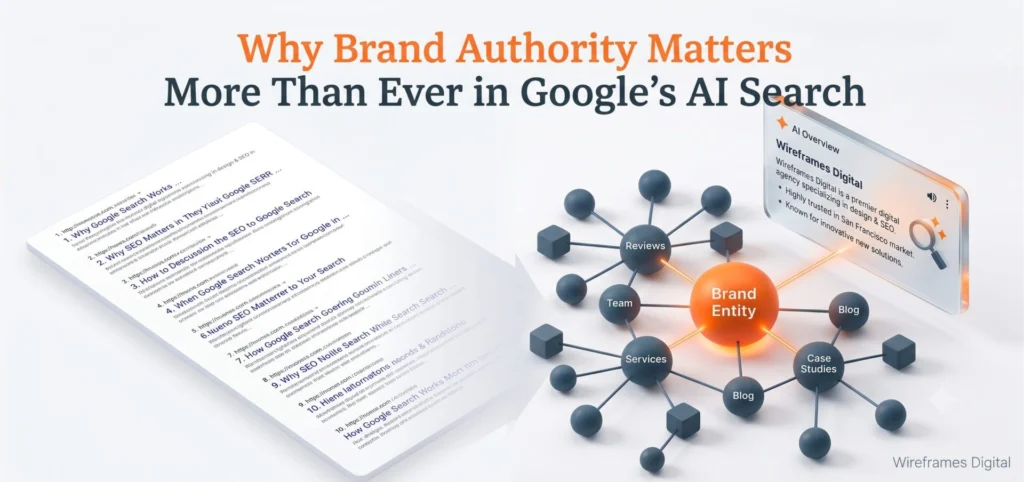

A Technical Blueprint for Generative Engine Optimization (GEO), Entity Resolution, and Scaling Organic Revenue in 2026.
The era of relying solely on “ten blue links” is officially over.
In February 2024, Gartner predicted that traditional search engine volume would drop by 25% by 2026. Two years later, that prediction serves as a conservative baseline. Google’s integration of AI Overviews directly into the SERP has permanently altered the user journey, creating the most aggressive contraction of traditional top-of-funnel organic click-through rates (CTR) in search history.
For businesses, the reality is mathematical: ranking #1 for a broad informational query no longer guarantees pipeline revenue. Today, visibility and revenue belong exclusively to the brands that generative engines trust enough to cite as definitive entities.
At Wireframes Digital, we have completely restructured our internal 8-Phase Framework to adapt to this Retrieval-Augmented Generation (RAG) ecosystem. Here is the unvarnished data on what has changed, the mechanical realities of entity resolution, and the exact technical blueprints you need to survive.
The Hard Data: Pre-AI vs. Post-AI Boom
The surface we have been measuring for a decade is actively shrinking. Relying on historical session volume targets will lead to catastrophic misallocations of marketing budget.
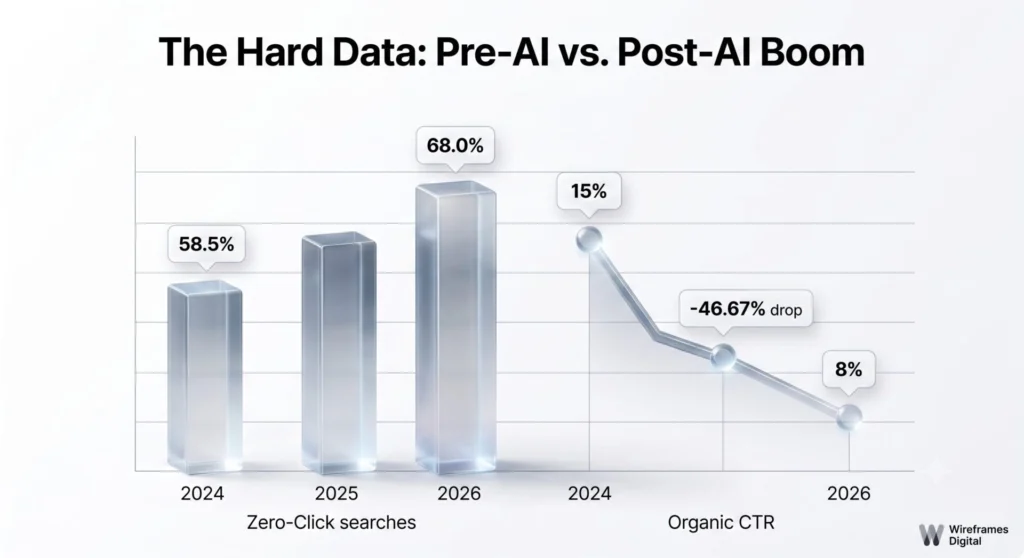
- The Zero-Click Surge: In 2024, 58.5% of US Google searches ended without a click to the open web. By June 2026, SparkToro and Similarweb data confirm this figure has surged to 68.0%—a 16.24% relative growth in zero-click behavior.
- AI Overview Trigger Rates: AI Overviews currently trigger on approximately 30% of US Google queries. For question-based intent (who, what, why, how), the trigger probability increases by a multiple of 3.2.
- The CTR Collapse: The presence of an AI Overview fundamentally alters click behavior. Pew Research indicates that users click a website on just 8% of searches containing an AI summary, compared to 15% when no summary is present—a staggering 46.67% drop in CTR. Inside the AI summary itself, only 1% of users actually click a cited source link.
The Higher-Intent Conversion Paradox
While traditional organic CTR drops dramatically, there is a massive, highly lucrative silver lining that most traditional agencies miss: The Conversion Paradox.
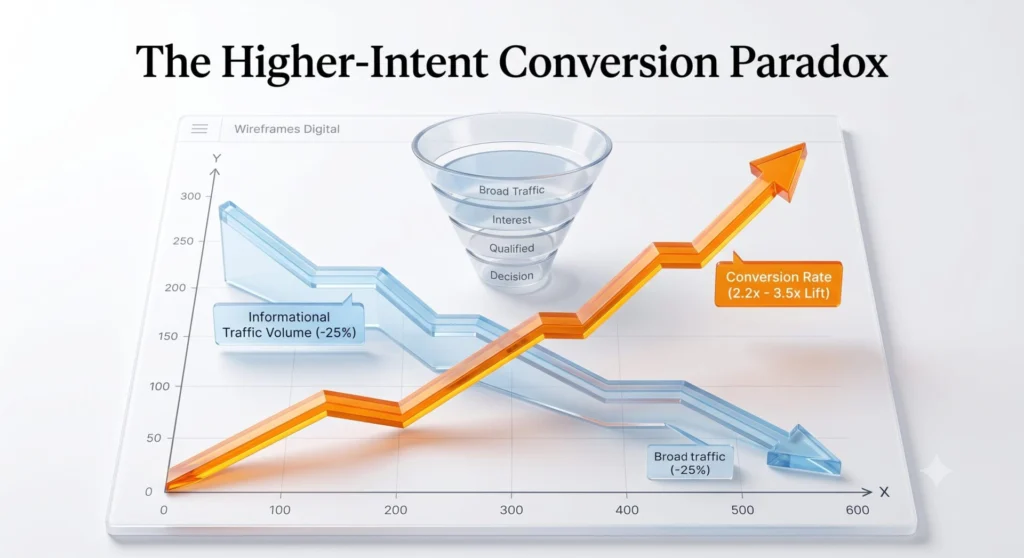
When a user engages with an AI Overview or a conversational LLM (like ChatGPT or Claude), the generative engine acts as a pre-qualifying filter. The engine digests the top-of-funnel research, meaning that any traffic that does click through to your domain possesses significantly higher purchase intent.
While total session volume for informational queries declines by ~25%, the conversion rate for AI-referred traffic often scales by 2.2x to 3.5x. The user landing on your Enterprise SEO Services page via an AI citation is no longer browsing; they have been explicitly directed to your business as the definitive solution.
The Paradigm Shift: Traditional SEO vs. GEO
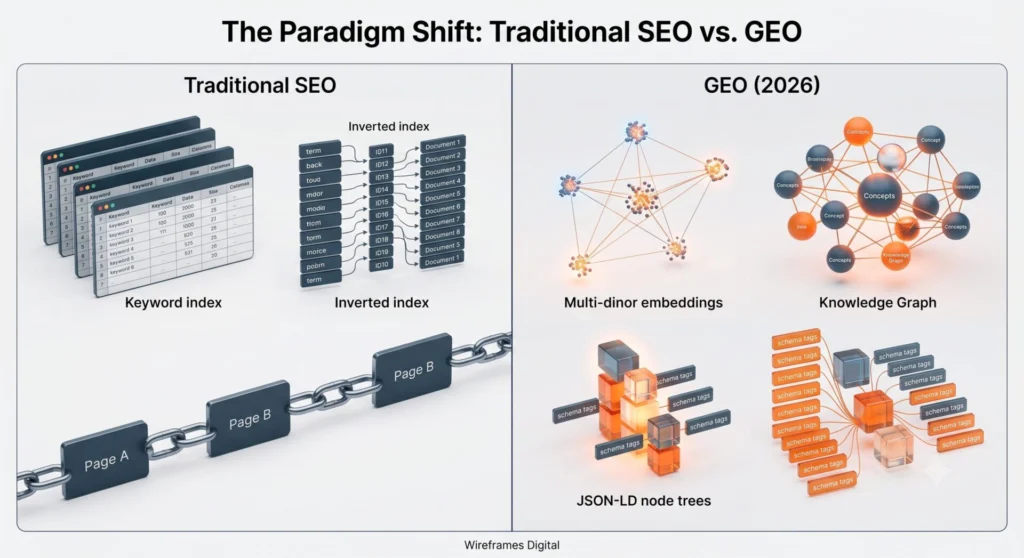
To capture this pre-qualified traffic, search architecture must evolve from traditional Search Engine Optimization (SEO) to Generative Engine Optimization (GEO).
| Optimization Vector | Traditional SEO (2015–2023) | Generative Engine Optimization / GEO (2024–2026+) |
| Primary Metric | Keyword Rankings & Session Volume | Entity Mentions, AI Citations & Pipeline Revenue |
| Indexing Model | Page-level Keyword & Inverted Index | Knowledge Graph & Vector Embeddings (RAG) |
| Content Strategy | High-volume informational blogs | Proprietary data, primary research & expert quotes |
| Technical Focus | Crawl budget, URL silos, title tags | JSON-LD Schema, Entity Mapping, Core Web Vitals |
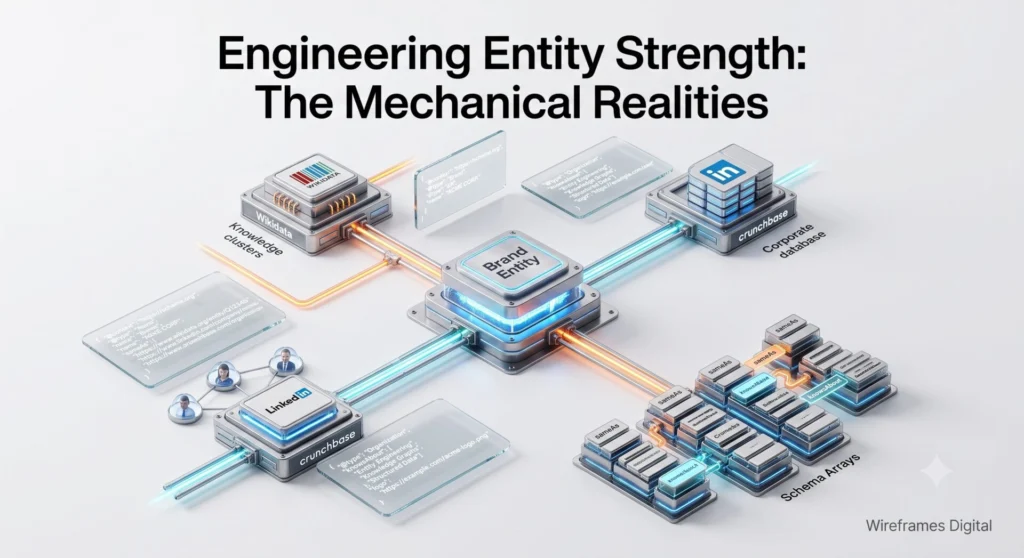
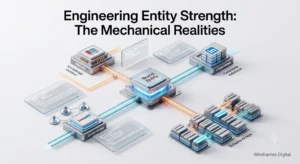
Engineering Entity Strength: The Mechanical Realities
LLMs do not understand “keywords”; they understand mathematical relationships between entities (people, places, concepts, brands).
To secure visibility in 2026, you must enforce technical entity resolution. This requires structuring your code so that generative engines can flawlessly map your brand across the web. This means moving beyond basic <title> tags and executing rigorous Knowledge Graph alignment, Wikidata reconciliation, and sameAs array clustering.
Below is the foundational JSON-LD Organization schema blueprint we deploy to mechanically force entity association for our clients.
JSON
{
  "@context": "https://schema.org",
  "@type": "Organization",
  "name": "Your Brand Name",
  "url": "https://yourdomain.com",
  "logo": "https://yourdomain.com/logo.png",
  "sameAs": [
    "https://www.wikidata.org/wiki/QXXXXXX",
    "https://www.linkedin.com/company/yourbrand",
    "https://crunchbase.com/organization/yourbrand"
  ],
  "knowsAbout": [
    "Enterprise Search Engine Optimization",
    "Generative Engine Optimization",
    "Search Architecture"
  ]
}
By explicitly defining the knowsAbout array and clustering authoritative sameAs nodes, you supply the exact data vectors LLMs use to construct RAG outputs.
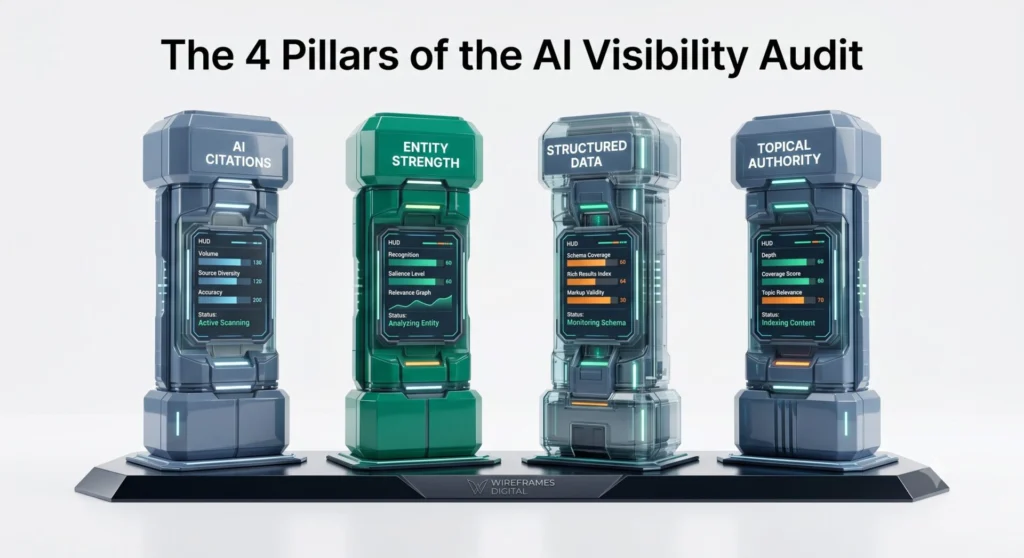
The 4 Pillars of the AI Visibility Audit
We have integrated a mandatory AI Visibility Audit into our 8-Phase framework, grading domains across four strict pillars:
- AI Citations: Generative engines use RAG to search indexed content before composing an answer. We measure your citation frequency across Google AI Overviews, Perplexity, and ChatGPT.
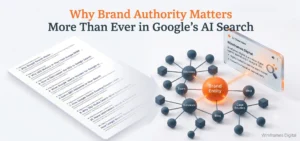
- Entity Strength: We audit your digital footprint—brand sentiment mapping, digital PR, and unlinked mentions—ensuring your brand is mathematically recognized as the definitive authority in your niche.
- Structured Data (Schema): Making your knowledge effortlessly parsable. We audit for perfectly nested FAQ, HowTo, Article, and Organization markup.
- Topical Authority: We map your semantic clusters. If your site lacks deep, interconnected topical coverage, the AI will bypass you and pull answers from a competitor whose Phase 3 Skyscraper architecture is superior.
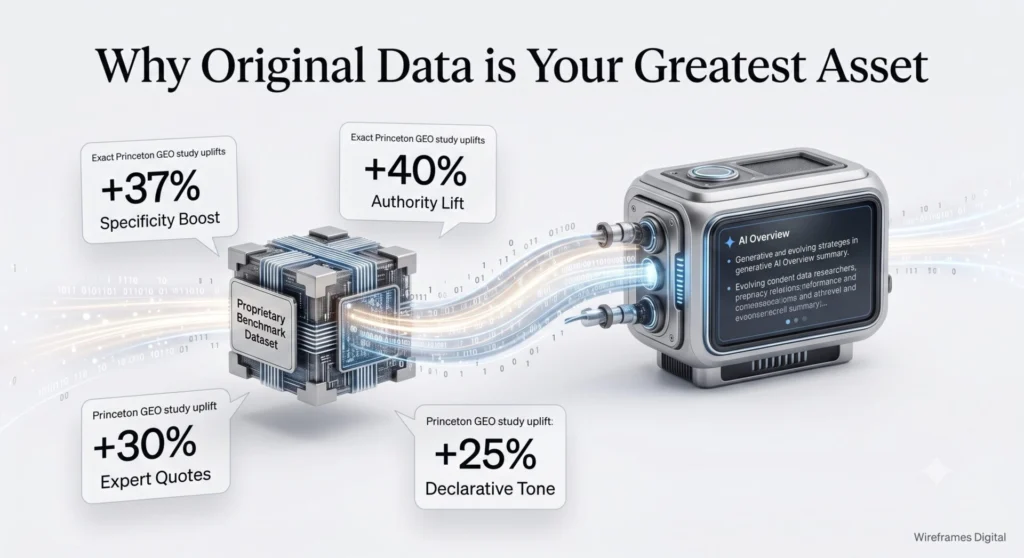
Why Original Data is Your Greatest Asset
If you want generative engines to cite you, you must feed them hard data, not qualitative fluff.
A landmark 2024 Princeton study on Generative Engine Optimization (GEO) proved the exact inputs that trigger AI citations:
- The Specificity Boost: Replacing vague claims with original, hard numbers produces a 37% uplift in AI citation frequency.
- The Authority Lift: Citing highly authoritative, non-competing sources within your own content lifts overall AI visibility by 40%.
- Expert Attribution: Including direct, fully attributed quotes from named industry professionals increases AI inclusion by 30%.
- Declarative Tone: Writing with an authoritative tone—stripping out hedging words like “might” or “perhaps”—increases citation rates by 25%.
This is why we rigorously publish anonymized, factual datasets, such as our Mumbai SEO Statistics & Local Search Trends Report. By injecting proprietary benchmarks into the ecosystem, you force the AI to cite you as the primary source.
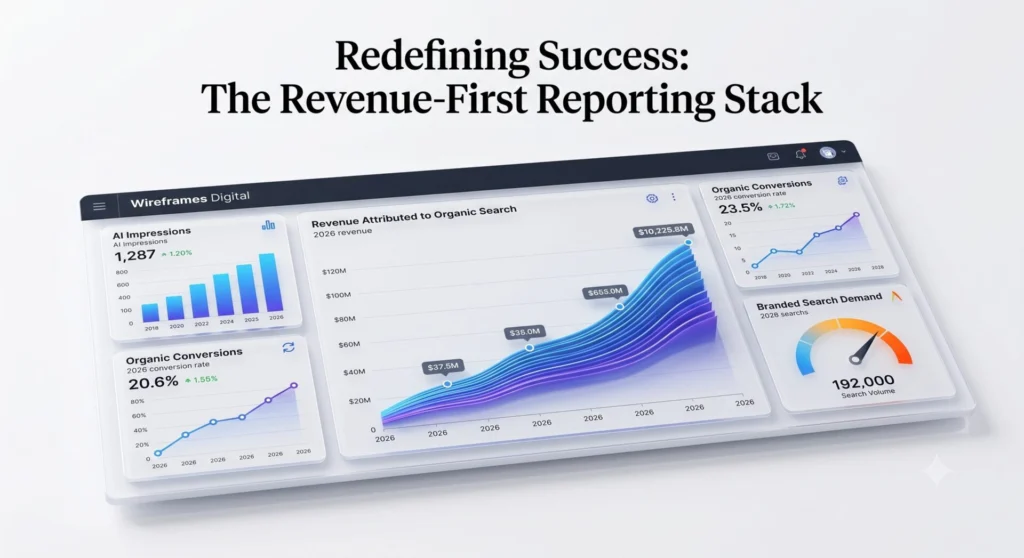
Redefining Success: The Revenue-First Reporting Stack
Marketing teams measuring performance purely by overall sessions are managing a failing KPI. At Wireframes Digital, whether scaling D2C E-commerce SEO or dominating the UK search market, our reporting tracks the metrics that dictate enterprise growth in 2026:
- Organic Conversions: Measuring hard pipeline leads, RFQs, and sales generated from organic search.
- AI Impressions: Tracking your brand’s presence within RAG-generated summaries.
- Branded Search Demand: Monitoring direct searches for your brand name—the ultimate indicator that your entity strength and market positioning are compounding.
- Google Business Profile Performance: For businesses utilizing our Local SEO Services, the map pack frequently bypasses the AI Overview entirely. We track direct calls, direction requests, and localized API conversions.
- Revenue Attributed to Organic Search: We integrate directly with client CRM data. Rankings without revenue are vanity metrics.
The Bottom Line
Search algorithms have permanently shifted from retrieving documents to generating answers. If your strategy remains fixated on churning out generic informational blogs to harvest top-of-funnel traffic, your metrics will continue to bleed. The brands that win the next decade of search will be the ones that engineer undeniable entity authority, publish proprietary datasets, and execute search architectures optimized exclusively for revenue.
Ready to test your brand’s resilience against AI search engines? Contact the Wireframes Digital team to commission a comprehensive AI Visibility Audit for your domain.