


Google Search is becoming more than a list of blue links. AI Overviews and AI Mode can summarize information about a company, product, service, or local business before a potential customer ever visits the website.
That creates a new SEO problem that is easy to underestimate: what happens when the AI summary is wrong?
Recent reporting in August 2026 has highlighted small businesses dealing with inaccurate or misleading AI-generated descriptions, including cases where businesses were confused with other companies or information was pulled from outdated reviews, forums, and social content. For a local business, that is not merely a search-ranking problem. It can become a reputation and conversion problem.
This changes how businesses should think about SEO in 2026. Ranking for a keyword is still important, but it is no longer enough to ask, “Where do we rank?” You also need to ask, “What does Google understand about our business, and what information can it confidently associate with our brand?”
This guide explains the emerging reputation side of AI Search and how businesses can build a stronger, more consistent search presence without chasing gimmicky AEO or GEO tactics.
Why AI Search Creates a New Reputation Layer
Traditional Google Search generally gave businesses a degree of control over the first impression. A searcher could see the title tag, meta description, Google Business Profile, reviews, website pages, and other search results and decide what to trust.
AI Search changes the presentation layer. Instead of requiring a person to inspect several sources, Google can synthesize information into an answer.
Google’s official documentation says AI Overviews and AI Mode use relevant links and content from Google’s Search systems to help answer questions. Google also says the foundational SEO practices that apply to classic Search remain relevant to these AI experiences. There are no special technical requirements that guarantee inclusion in AI Overviews or AI Mode.
That means the objective is not to “hack” an AI model. The objective is to make your business information clear, consistent, crawlable, trustworthy, and supported by authoritative signals across the web.
The August 2026 Warning for Small Businesses
A recent Business Insider report described small businesses that say Google’s AI-generated summaries have presented inaccurate or misleading information about their companies. The reported problems include business mix-ups and AI summaries drawing from unreliable, old, or context-poor sources.
That reporting should not be interpreted as proof that every AI Overview is inaccurate. It is better understood as a warning about a new failure mode: AI systems can synthesize several imperfect sources into a confident-sounding answer.
For a customer searching for a restaurant, clinic, law firm, real-estate company, manufacturer, hotel, or professional service, even a small factual error can influence the next action.
| Traditional SEO concern | AI Search reputation concern |
|---|---|
| Is the page indexed? | Is the business entity understood consistently? |
| Does the page rank? | Is the business represented accurately in generated answers? |
| Is the title compelling? | Are the facts across authoritative sources consistent? |
| Are backlinks strong? | Do independent sources reinforce the same brand identity? |
| Is the Google Business Profile optimized? | Do local listings, reviews, website content, and business data agree? |
SEO Is Still the Foundation
It is tempting to treat AEO and GEO as a completely separate discipline. Google’s own documentation argues against that approach.
Google’s current guidance says its generative Search features are rooted in core Search ranking and quality systems. Pages need to meet normal technical requirements and be eligible to appear in Search. Google specifically recommends helpful, reliable, people-first content rather than special AI-only optimization tricks.
That gives businesses a useful strategic principle:
Do not abandon SEO to chase AI. Build better SEO that also gives AI systems better information to retrieve and understand.
What Google Needs to Understand About a Business
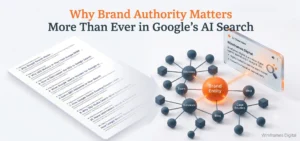
A strong business entity should have a consistent information footprint. Think of the web as a network of references that collectively describe the company.
At a minimum, the following should be consistent:
- Business name
- Official website
- Primary business category
- Physical address or service area
- Phone number
- Products and services
- Opening hours
- Founder or leadership information where relevant
- Industry and specialization
- Locations served
- Customer reviews and testimonials
- Third-party business profiles
If one source describes a company as a digital marketing agency while another describes it as a web-development company, and a third uses an old business name, an AI system has more ambiguity to resolve.
This is why entity consistency is becoming an important part of modern SEO.
1. Build a Clear About Page
Your About page is not just a branding page. It can help establish who the company is, what it does, where it operates, and who is responsible for it.
A strong About page should clearly explain:
- When the company was established
- Where it operates
- What services it provides
- Who leads the business
- Relevant expertise and experience
- Industries served
- Evidence of work and results
Avoid vague agency language such as “we are a leading innovative solution provider.” Specific information is more useful to both people and search systems.
2. Create Dedicated Service Pages
One of the simplest ways to improve machine understanding is to stop making one generic page explain everything.
If your company provides SEO, Local SEO, Technical SEO, Google Ads, and Website Development, each major service deserves a dedicated, useful page.
For Wireframes Digital, this cluster structure supports commercial pages such as SEO Company in Mumbai, SEO Company in Navi Mumbai, and Local SEO for Navi Mumbai Businesses.
The goal is not to create dozens of thin pages. The goal is to give each important service a page that demonstrates expertise, explains the offer, answers buyer questions, and connects naturally to supporting content.
3. Strengthen Local Entity Signals
For local businesses, AI Search reputation management overlaps heavily with Local SEO.
Your website, Google Business Profile, local directories, review profiles, social profiles, and third-party mentions should reinforce the same core business information.
Pay particular attention to:
- NAP consistency
- Business category accuracy
- Service-area descriptions
- Location pages
- Reviews and owner responses
- Local citations
- Relevant local publications
- Industry directories
- Photographs and business evidence
Do not create fake listings or manufacture reviews. The objective is to create a trustworthy information ecosystem, not to flood the web with duplicate profiles.
4. Treat Reviews as Search Data
Reviews have always influenced Local SEO and conversions. In an AI-search environment, they can also become part of the information ecosystem from which a business is understood.
This creates two priorities.
First, actively earn legitimate reviews from real customers. Second, monitor the language customers repeatedly use to describe the business.
If customers consistently describe a company as a “B2B industrial SEO agency” but the website only says “digital marketing company,” there is an opportunity to make the site’s positioning more precise.
Reviews should never be scripted or manipulated. Genuine customer language is valuable precisely because it is independent evidence.
5. Publish First-Hand Information
Commodity content is easy for AI systems to reproduce. First-hand information is harder to replace.
For example, instead of publishing another generic article titled “What Is Technical SEO?”, publish:
- A real migration postmortem
- A before-and-after SEO case study
- An analysis of Search Console data
- A local SEO experiment
- A technical audit with anonymized findings
- A comparison based on actual client outcomes
- An original benchmark
This aligns with Google’s guidance emphasizing unique, satisfying content that adds value beyond what already exists.
6. Use Structured Data Correctly
Structured data can help search engines understand what a page represents. It should not be treated as a magic switch for AI visibility.
Use appropriate schema for the content and entity you actually represent. Depending on the page, this can include Organization, LocalBusiness, Service, Article, BreadcrumbList, Product, or other relevant types.
Most importantly, the structured data should agree with the visible content. Marking up information that users cannot find on the page is not a sustainable optimization strategy.
7. Monitor AI Search Mentions Alongside Rankings
This is where SEO reporting needs to evolve.
Traditional reporting might include:
- Organic clicks
- Impressions
- Rankings
- CTR
- Conversions
Those metrics remain essential. But businesses should increasingly add:
- AI Overview appearances
- AI Mode visibility
- Brand mentions in AI answers
- Citation sources
- Incorrect business information
- Competitor associations
- Changes in branded search demand
Google introduced dedicated generative-AI performance reporting in Search Console in June 2026. The new reports provide visibility into impressions from generative AI features such as AI Overviews and AI Mode, although the rollout is being expanded gradually.
This is important because it moves AI Search measurement closer to a first-party reporting environment instead of forcing businesses to rely entirely on third-party estimates.
8. Build a Reputation Correction Process
If an AI answer contains incorrect information about your business, do not immediately respond by publishing dozens of new pages.
Use a structured correction process:
- Record the exact query and generated answer.
- Identify the incorrect claim.
- Find the authoritative source that should support the correct information.
- Check your own website and business profiles for conflicting information.
- Correct outdated third-party information where possible.
- Strengthen the correct information on your primary website.
- Use Google’s available feedback mechanisms for inaccurate Search information.
- Recheck the query periodically.
This is closer to digital reputation management than traditional keyword optimization.
9. Don’t Chase Fake AEO or GEO Hacks
The AI Search industry has produced plenty of tactics that sound sophisticated but have little durable value.
Be skeptical of anyone promising guaranteed AI citations through:
- Keyword stuffing designed specifically for AI
- Hidden text
- Fake entity profiles
- Mass-produced “GEO pages”
- Artificial review generation
- Spammy forum mentions
- Large-scale low-quality guest posts
- Invented statistics
Google’s official guidance is remarkably straightforward: the fundamental SEO requirements still matter. Generative Search uses information from the Search index and its core quality systems.
AI Search Changes the Definition of Visibility
Traditional SEO has often framed visibility as a ranking position.
AI Search makes visibility multidimensional.
| Visibility layer | Question |
|---|---|
| Organic ranking | Does the page rank for the target query? |
| AI visibility | Is the brand or page surfaced in AI-generated answers? |
| Entity visibility | Does Google correctly understand who the business is? |
| Local visibility | Does the business appear accurately for local intent? |
| Reputation visibility | Does the wider web reinforce the right brand story? |
| Conversion visibility | Does the searcher have enough confidence to take action? |
A business can rank well and still have a weak entity footprint. It can also appear in an AI answer and still lose the customer if the generated description is inaccurate or unconvincing.
What This Means for SEO Agencies
SEO agencies need to expand their definition of technical and content strategy.
A modern SEO engagement should connect:
- Technical SEO
- Content strategy
- Topical authority
- Local SEO
- Entity optimization
- Digital PR and authoritative mentions
- Conversion optimization
- Search Console analysis
- AI Search visibility monitoring
That does not mean every client needs a separate “GEO campaign.” In many cases, the correct answer is to improve the underlying SEO architecture first.
Wireframes Digital’s broader strategy follows this model: build commercial money pages, support them with topic clusters, reinforce authority with useful content and credible references, and connect SEO performance to business outcomes.
A Practical AI Reputation SEO Checklist
- Audit your brand name across Google Search and major business profiles.
- Check whether your website clearly describes what the company does.
- Verify your business name, address, phone, hours, and service areas.
- Review your Google Business Profile categories and services.
- Check major third-party listings for outdated information.
- Create or improve dedicated pages for important services.
- Publish first-hand case studies and original research.
- Implement appropriate structured data.
- Monitor AI Overviews and AI Mode for important branded and commercial queries.
- Record and correct materially inaccurate information.
- Track AI visibility alongside organic clicks, impressions, rankings, and conversions.
The Bigger SEO Lesson
The most important lesson from the current AI Search transition is not that traditional SEO has disappeared.
It is that search engines are becoming better at constructing an understanding of businesses from many sources.
That makes inconsistency more dangerous and authority more valuable.
If your website says one thing, your business profiles say another, old directory pages contain outdated information, reviews describe the company differently, and third-party sources confuse your brand with another business, you are creating ambiguity.
If your website, structured data, local profiles, authoritative mentions, customer evidence, and first-hand content consistently reinforce the same entity, you are giving search systems a much stronger foundation.
That is the real opportunity behind AEO and GEO in 2026.
Frequently Asked Questions
Can Google AI Overviews give incorrect information about a business?
Yes. Recent reporting has documented cases in which businesses say AI-generated Search summaries contained inaccurate or misleading information. Businesses should treat this as a reputation-monitoring issue as well as an SEO issue.
Does AEO replace traditional SEO?
No. Google’s official guidance says foundational SEO practices remain relevant to AI Overviews and AI Mode. The strongest approach is to improve the underlying website, content, technical accessibility, and authority rather than pursue a completely separate set of AI hacks.
How can a business improve its chances of appearing in AI Search?
Make the website technically accessible and indexable, publish helpful and original content, demonstrate expertise, strengthen entity consistency, build credible authority, and make important business information easy to understand.
Does schema markup guarantee AI Overview visibility?
No. Structured data can help search engines understand content, but it does not guarantee rankings or inclusion in AI features. It should accurately represent the visible content and the entity behind the page.
Should local businesses care about AI Search?
Yes. Local businesses have an additional reason to care because incorrect information about location, services, hours, categories, or reputation can directly affect customer decisions. Strong Local SEO and consistent business information are therefore increasingly important.
What should I monitor if my business is concerned about AI Search reputation?
Monitor important branded queries, service queries, local queries, AI Overview and AI Mode appearances, generated descriptions, citations, Google Business Profile information, reviews, and third-party business listings. Keep a record of material inaccuracies and correct the underlying sources.
Final Takeaway
AI Search is changing how people encounter businesses, but the fundamentals remain familiar.
Build a technically sound website. Publish genuinely useful content. Establish clear topical authority. Make your business entity easy to understand. Keep local and third-party information consistent. Earn real customer evidence. Monitor how your brand is represented.
The future of SEO is not about convincing an AI to mention your company. It is about becoming the company that search systems have strong reasons to understand, trust, and recommend.
If your business needs a strategy that connects traditional SEO, Local SEO, Technical SEO, and AI Search visibility, explore our SEO services in Mumbai and our SEO services in Navi Mumbai.
Sources: Google Search Central documentation on AI features and generative AI optimization; Google Search Central’s June 3, 2026 Search Console announcement; Business Insider reporting published August 12, 2026 on small-business concerns around inaccurate AI Overviews.